


The publishing industry has undergone a remarkable transformation over the past two decades, with e magazines emerging as a dominant force in how audiences consume periodical content. These digital publications combine the rich editorial tradition of print magazines with the interactive capabilities, instant distribution, and data-driven insights of the internet. As we navigate 2026, understanding the mechanics, opportunities, and challenges of e magazines has become essential for publishers, advertisers, and content creators seeking to reach engaged audiences in an increasingly fragmented media landscape.
Understanding the E Magazine Landscape
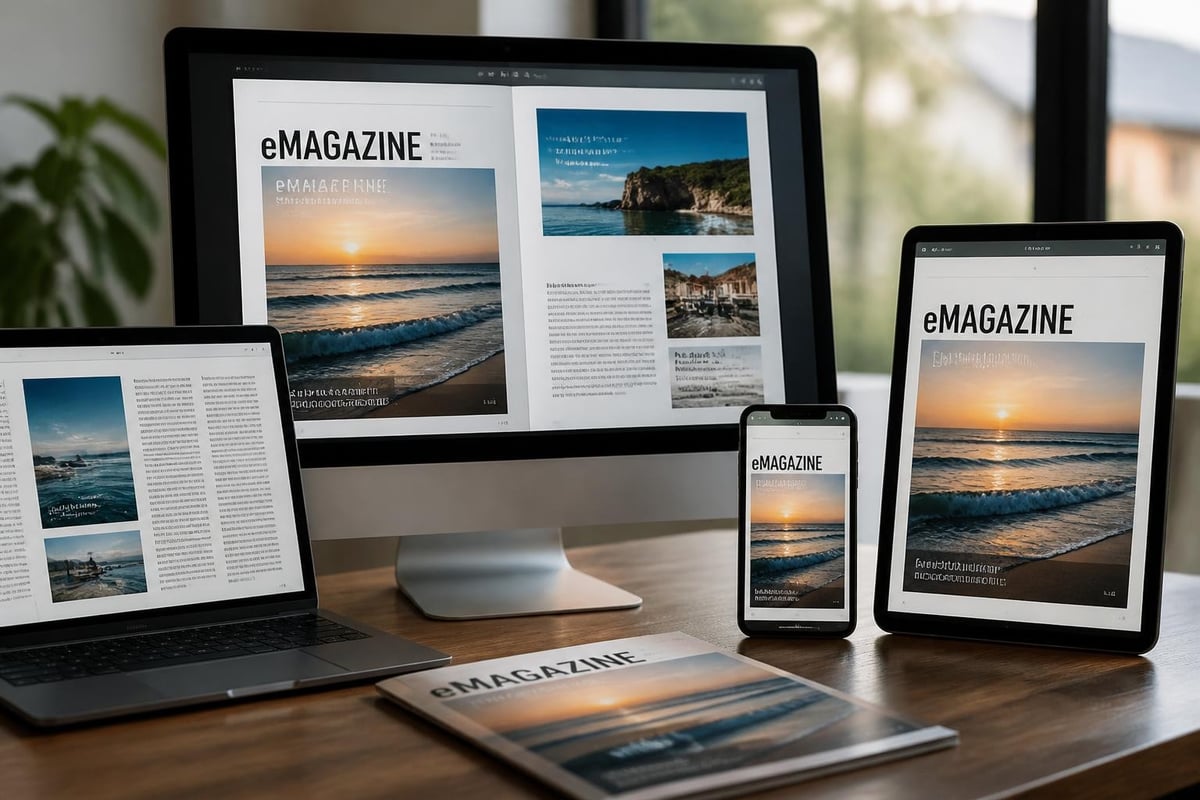
E magazines represent far more than simple PDF versions of print publications uploaded to the web. They encompass a diverse ecosystem of digital periodicals delivered through websites, mobile applications, email newsletters, and specialized reading platforms. The format has evolved to include interactive elements such as embedded video, audio clips, clickable navigation, social sharing features, and personalized content recommendations that enhance reader engagement beyond what traditional print could achieve.
The market for e magazines has matured considerably since the early experimental phase. According to Press Gazette’s analysis of digital magazine circulation, leading publishers now report digital editions accounting for substantial portions of their total readership, with some titles achieving entirely digital-first sustainability. This shift reflects broader changes in media consumption patterns, where convenience, portability, and instant access have become paramount reader expectations.
Technical Formats and Standards
Publishers distribute e magazines through several technical formats, each with distinct characteristics and use cases:
- EPUB: A standardized, reflowable format based on web technologies that adapts to different screen sizes
- PDF: Fixed-layout documents that preserve original design but offer limited interactivity
- Web-based HTML: Publications delivered entirely through browsers without downloads
- Proprietary app formats: Custom solutions built for specific platforms or publishers
The EPUB 3.3 specification has emerged as the industry standard for many digital magazine producers, offering robust support for rich media, interactivity, and complex layouts while maintaining cross-platform compatibility. Publishers choosing EPUB benefit from widespread reader application support and future-proof archival qualities that proprietary formats cannot guarantee.
Accessibility considerations have become non-negotiable in professional e magazine production. The EPUB Accessibility 1.1 standard provides concrete requirements ensuring publications remain usable for readers with visual, auditory, or cognitive disabilities. Implementing these guidelines not only expands potential readership but also demonstrates corporate responsibility and may satisfy legal requirements in various jurisdictions.
Distribution Strategies for Maximum Reach
Effective distribution separates successful e magazines from those struggling to find audiences in the crowded digital marketplace. Publishers must thoughtfully consider where their target readers spend time and how they prefer to discover new content.
Platform Selection and Optimization
| Platform Type | Advantages | Considerations |
|---|---|---|
| Direct website | Full control, data ownership, brand experience | Requires traffic generation, technical maintenance |
| App stores (Apple News, Google Play) | Built-in discovery, established user base | Revenue sharing, limited branding, platform rules |
| Aggregators (Readly, Magzter) | Broad exposure, subscription bundling | Lower per-reader revenue, commodification risk |
| Email/Newsletter | High engagement, owned audience | Design constraints, deliverability challenges |
According to DataReportal’s global digital consumption analysis, mobile devices now account for the majority of digital magazine reading sessions, making responsive design and app optimization critical priorities. Publishers must ensure their e magazines deliver excellent experiences across smartphones, tablets, and desktop computers without requiring separate production workflows for each format.
Social media platforms serve dual purposes in e magazine distribution strategies. They function as promotional channels driving traffic to full publications while also hosting content snippets, preview articles, and teaser materials that build anticipation for upcoming issues. Smart publishers develop platform-specific content variations rather than simply cross-posting identical material across networks.
Building Direct Reader Relationships
The most valuable distribution strategy involves cultivating direct relationships with readers through owned channels. Email lists, mobile app installations, and registered website accounts provide publishers with first-party data unmediated by third-party platforms. These direct connections enable personalized communication, reduced dependence on algorithm changes, and more predictable revenue modeling.
Registration barriers must be carefully calibrated. Too aggressive, and potential readers abandon before sampling content. Too permissive, and publishers sacrifice valuable audience data and engagement opportunities. Testing different approaches-metered paywalls, email-for-access exchanges, or freemium models-helps identify optimal strategies for specific audience segments and content types.
Monetization Models That Work
Financial sustainability remains the central challenge for most e magazine publishers. Unlike the print era when newsstand sales and display advertising provided relatively predictable revenue streams, digital economics require more sophisticated and diversified approaches.
Subscription and Membership Revenue
Digital subscriptions have proven the most reliable revenue source for quality e magazines focused on specialized topics or premium journalism. InPublishing’s 2025 outlook survey found that publishers with strong subscription businesses reported more stable revenue growth compared to those relying primarily on advertising. The key lies in creating sufficient unique value that readers willingly pay recurring fees.
Successful subscription strategies typically include:
- Clear value differentiation from free content
- Multiple price tiers serving different reader segments
- Bundling options combining e magazines with other products or services
- Flexible billing cycles (monthly, annual, multi-year)
- Free trial periods reducing purchase friction
Membership models extend beyond simple content access to create communities around publications. Members might receive exclusive newsletters, event invitations, discussion forum access, or input into editorial priorities. This approach works particularly well for e magazines covering niche topics where readers value connections with like-minded enthusiasts as much as the content itself.

Digital Advertising Opportunities
Despite challenges from ad blocking and banner blindness, advertising remains significant for many e magazine business models. Digital formats enable targeting precision impossible in print, allowing advertisers to reach specific demographic segments, behavioral cohorts, or even individual readers based on their interests and browsing history.
The IAB’s digital economy measurement report provides comprehensive data on ad format performance and pricing trends. Native advertising-where promotional content matches the editorial style and context of surrounding articles-generally delivers higher engagement rates than traditional display banners. E magazines that maintain clear labeling while seamlessly integrating sponsored content often achieve better results for both readers and advertisers.
Programmatic advertising platforms automate the buying and selling process, filling inventory efficiently but often at lower rates than direct sales. Many successful e magazines employ hybrid approaches, reserving premium placements for direct-sold campaigns while using programmatic to monetize remnant inventory.
Content Creation and Editorial Strategy
The digital medium fundamentally changes how readers interact with magazine content, requiring editorial teams to adapt traditional approaches while maintaining journalistic standards and brand voice.
Leveraging Interactive Elements
E magazines excel when they exploit capabilities unavailable in print. Embedded video interviews provide richer context than written quotes alone. Interactive data visualizations allow readers to explore statistics from multiple angles. Clickable references connect related articles across issues, transforming discrete publications into interconnected knowledge bases.
However, interactivity must serve editorial purpose rather than existing for novelty. Readers quickly abandon gimmicky features that slow loading, distract from core content, or frustrate navigation. The best implementations feel natural and enhance understanding rather than calling attention to themselves.
Long-form journalism remains viable and valuable in e magazines despite conventional wisdom about short digital attention spans. Pew Research’s analysis of audience behavior indicates that readers will engage with substantial pieces when topics interest them and presentation remains compelling. Publishers like Fairmont Post demonstrate that thoughtful coverage spanning business, finance, technology, and culture can find appreciative audiences in digital formats.
Production Workflows and Tooling
Efficient production separates profitable e magazines from those drowning in operational costs. Modern content management systems enable editors to publish once while automatically formatting for multiple distribution channels. Version control prevents embarrassing errors while allowing rapid updates when breaking news affects evergreen content.
Photography and illustration budgets require careful consideration in e magazine economics. Stock imagery provides cost-effective solutions for many applications, but exclusive visual content differentiates premium publications from commodity competitors. Rights management becomes more complex in digital publishing, where images might appear across websites, apps, social media, and email-each potentially requiring separate licensing.
Audience Analytics and Growth
Data represents one of e magazines' most significant advantages over print predecessors. Publishers can track which articles readers engage with, how long they spend on each page, where they abandon issues, and which topics drive subscriptions or sharing behavior.
Metrics That Matter
Not all analytics deserve equal attention. Vanity metrics like total page views provide less actionable insight than engagement indicators such as:
- Time on page: Distinguishes genuine reading from accidental clicks
- Completion rate: Shows whether readers finish articles they start
- Return frequency: Indicates habit formation and loyalty
- Referral source: Reveals which distribution channels deliver quality traffic
- Conversion funnel: Tracks progression from visitor to subscriber
Cohort analysis helps publishers understand how different reader segments behave over time. First-time visitors require different content strategies than loyal subscribers. Readers arriving from social media may have different interests than those from email newsletters or search engines.
Retention and Churn Management
Acquiring new subscribers costs significantly more than retaining existing ones, making churn reduction a critical priority. E magazines can identify at-risk subscribers through declining engagement patterns-reduced reading frequency, lower time per visit, or decreased interaction with premium content.
Proactive retention strategies include:
- Personalized re-engagement emails highlighting relevant content
- Exclusive perks for long-term subscribers
- Feedback surveys identifying dissatisfaction sources
- Win-back campaigns offering discounts to lapsed subscribers
- Content recommendations based on individual reading history
A/B testing enables data-driven optimization of everything from email subject lines to paywall placement. Publishers should systematically experiment with variables affecting reader behavior, measuring results rigorously rather than relying on assumptions or industry conventional wisdom.
Technical Infrastructure and Platform Choices
Behind every successful e magazine stands robust technical infrastructure supporting content delivery, user management, payment processing, and analytics collection. Publishers face critical build-versus-buy decisions that significantly impact operational flexibility and costs.
Publishing Platform Options
| Platform Type | Best For | Typical Cost Range |
|---|---|---|
| Enterprise CMS (Adobe, WordPress VIP) | Large publishers with complex needs | $50,000-$500,000+ annually |
| Mid-market solutions (Ghost, Substack) | Growing publications seeking balance | $1,000-$20,000 annually |
| DIY frameworks (open-source CMS) | Technical teams willing to customize | Variable (primarily labor costs) |
| All-in-one magazine platforms | Publishers wanting turnkey solutions | $5,000-$50,000 annually |

Cloud hosting has become standard for e magazines, providing scalability to handle traffic spikes when popular issues release while avoiding infrastructure overinvestment during slower periods. Content delivery networks (CDNs) ensure fast loading globally, critical for maintaining reader engagement across geographically dispersed audiences.
Security considerations extend beyond protecting payment data to safeguarding subscriber information and preventing content theft. Digital rights management (DRM) remains controversial-strict controls may prevent piracy but also frustrate legitimate readers-requiring thoughtful balance based on content value and competitive positioning.
Future Trends Shaping E Magazine Evolution
The e magazine landscape continues evolving as technologies mature and reader expectations shift. Publishers monitoring emerging trends position themselves to adapt quickly rather than reacting defensively when disruption arrives.
Artificial intelligence applications range from content personalization algorithms recommending relevant articles to automated transcription services enabling multimedia expansion. Some publishers experiment with AI-assisted writing for routine content while maintaining human oversight for analysis, opinion, and creative work. Transparency about AI usage maintains reader trust as these tools become more prevalent.
Audio versions of written content have exploded in popularity, driven by podcast growth and smart speaker adoption. E magazines increasingly offer text-to-speech features or professionally produced audio editions enabling consumption during commutes, exercise, or household activities when reading screens proves impractical.
The Reuters Institute’s Digital News Report highlights ongoing subscription fatigue as readers face dozens of paywalls across various publications. This environment creates opportunities for bundling strategies where multiple e magazines combine offerings, or for ad-supported models that provide free access in exchange for attention.
Guest Contributions and Community Building
Many successful e magazines incorporate reader participation beyond passive consumption. Guest posts from industry experts, practitioner case studies, or reader-submitted photography create community connections while reducing editorial production burdens. Clear submission guidelines and editorial standards maintain quality while encouraging diverse perspectives that enrich coverage.
Moderated discussion forums, comment sections, or social media groups extend engagement beyond published issues. These spaces enable readers to debate ideas, share experiences, and connect around shared interests-transforming publications from broadcast media into conversation platforms. Publishers must balance community vitality against moderation costs and potential reputation risks from problematic user content.
Adapting Print Heritage for Digital Success
Publishers transitioning from print roots face unique challenges and advantages. Established brand recognition and editorial expertise provide strong foundations, but legacy cost structures and organizational cultures may resist necessary changes.
Successful transitions typically involve parallel operation during adjustment periods rather than abrupt abandonment of print editions. This approach allows audience migration at natural paces while maintaining revenue from readers not yet ready for digital-only consumption. Print subscribers often represent the most loyal and valuable segments, deserving thoughtful accommodation rather than forced conversion.
Editorial teams require training and sometimes restructuring to excel at digital-native storytelling. Print magazine designers bring composition skills that translate well to screen layouts, but must learn responsive design principles, loading optimization, and interactive element integration. Writers accustomed to monthly deadlines may struggle adapting to continuous publishing cycles where content freshness drives traffic and engagement.
E magazines represent the future of periodical publishing, combining editorial tradition with digital innovation to serve modern reader needs. Success requires mastering technical standards, distribution strategies, monetization models, and audience analytics while maintaining the compelling storytelling that has always defined great magazine journalism. Whether you're launching a new publication or transforming an established brand, staying informed about industry developments and best practices proves essential. Fairmont Post provides comprehensive coverage of business, technology, culture, and trends shaping digital publishing and media innovation to help you navigate this dynamic landscape.


