


Organizations across every sector face mounting pressure to evolve beyond traditional norms and establish frameworks that resonate with modern workforces, technological realities, and shifting societal expectations. The concept of new culture has emerged not as a trend, but as a strategic imperative for companies seeking to remain competitive, attract talent, and navigate complexity in an interconnected global economy. Understanding how to intentionally design, implement, and sustain cultural transformation requires both evidence-based frameworks and a willingness to challenge deeply held assumptions about how work gets done.
Understanding What Defines New Culture
The term new culture encompasses far more than superficial perks or updated mission statements. It represents a fundamental shift in values, behaviors, and operating principles that distinguish forward-thinking organizations from those anchored in outdated paradigms.
Core Characteristics of Contemporary Organizational Culture
Modern organizational environments prioritize several defining elements that set them apart from traditional structures. Psychological safety ranks among the most critical, creating spaces where employees feel empowered to speak candidly, take calculated risks, and learn from failures without fear of retribution. Transparency in decision-making processes, financial information, and strategic direction builds trust across all organizational levels.
Additionally, new culture frameworks emphasize:
- Adaptive learning: Continuous skill development and knowledge sharing as core responsibilities
- Distributed authority: Decision-making power closer to information sources rather than concentrated at the top
- Purpose alignment: Clear connection between individual contributions and broader organizational mission
- Inclusive practices: Deliberate efforts to surface diverse perspectives and dismantle systemic barriers
Research from Stanford GSB on organizational culture archetypes demonstrates that different cultural profiles produce measurably different performance outcomes, suggesting that intentional culture design matters profoundly for sustained success.

The Digital Economy's Cultural Demands
Technological transformation drives much of the urgency around cultural evolution. Organizations operating in digital economy environments must cultivate capabilities that simply didn't exist in previous eras. Data literacy across functions, comfort with rapid experimentation, and fluency in remote collaboration tools have shifted from nice-to-have skills to baseline expectations.
The pandemic accelerated these shifts dramatically. Companies that previously resisted flexible work arrangements found themselves forced to adopt them overnight, revealing that many assumptions about productivity and presence were unfounded. This disruption created opportunities for organizations to question other inherited norms and reimagine their cultural foundations entirely.
Strategic Approaches to Culture Building
Creating new culture requires more than aspirational values posted on walls. It demands systematic effort across multiple organizational dimensions, supported by leadership commitment and structural reinforcement.
Evidence-Based Principles for Intentional Change
Seven evidence-based principles for culture change provide a practical framework for leaders undertaking transformation efforts. These principles emphasize starting with clear behavioral targets rather than abstract values, engaging employees in co-creating cultural norms, and establishing feedback mechanisms that make cultural shifts visible and measurable.
Implementation typically follows this sequence:
- Assess current state: Map existing cultural attributes through surveys, interviews, and behavioral observation
- Define target culture: Specify desired behaviors and outcomes with precision, avoiding vague aspirations
- Identify barriers: Surface structural, procedural, and psychological obstacles to change
- Design interventions: Create targeted initiatives addressing specific barriers and reinforcing desired behaviors
- Pilot and iterate: Test approaches in contained settings before broad rollout, learning from early attempts
- Scale systematically: Expand proven interventions while maintaining fidelity to core principles
- Measure and adjust: Track leading and lagging indicators, adapting strategies based on evidence
This methodical approach contrasts sharply with common but ineffective tactics like one-off training sessions or motivational campaigns unsupported by structural change.
Leadership Behaviors That Shape Culture
The gap between espoused values and lived experience destroys credibility faster than almost any other organizational failure. Leaders must model the behaviors they seek to cultivate, recognizing that their actions carry outsized weight in shaping cultural norms. MIT Sloan research on leadership styles highlights how approaches centered on genuine care and connection can transform organizational environments, particularly when paired with high performance standards.
| Leadership Practice | Cultural Impact | Implementation Example |
|---|---|---|
| Visible vulnerability | Normalizes learning from mistakes | Leaders sharing project failures in all-hands meetings |
| Consistent communication | Builds trust and alignment | Weekly transparent updates on company challenges |
| Recognition systems | Reinforces desired behaviors | Celebrating collaborative achievements over individual wins |
| Resource allocation | Demonstrates true priorities | Dedicating budget to training, not just productivity tools |
Leaders attempting to drive cultural transformation often underestimate how much their informal behaviors matter. The questions they ask in meetings, what they celebrate publicly, how they respond to bad news-these seemingly small moments accumulate into powerful cultural signals.

Navigating Cultural Evolution Across Different Contexts
Organizations don't exist in isolation. The broader cultural currents flowing through societies, industries, and global networks inevitably shape what's possible and desirable within any single company.
Global Perspectives on Cultural Stability and Change
UNESCO’s analysis of global cultural policies reveals how digital platforms, migration patterns, and economic integration are reshaping cultural norms worldwide. These macro-level shifts create both opportunities and tensions for organizations. A company operating across multiple countries must navigate varying cultural expectations around hierarchy, communication styles, and work-life boundaries while still maintaining some coherent organizational identity.
Academic research published in Nature examining cultural stability demonstrates that while some cultural traits prove remarkably persistent across generations, others shift more rapidly than commonly assumed. This evidence should inform realistic expectations about the pace of organizational culture change-some dimensions may transform quickly with focused effort, while others require sustained investment over years.
Industry-Specific Cultural Considerations
Different sectors face distinct cultural challenges and opportunities shaped by their regulatory environments, competitive dynamics, and talent pools. Technology companies pioneering new culture often emphasize flat hierarchies and radical transparency, but these same approaches may prove impractical in heavily regulated industries like healthcare or finance where compliance frameworks demand clear accountability chains.
Manufacturing organizations transitioning toward new culture must balance the realities of physical production environments with desires for increased autonomy and flexibility. The solutions that work for knowledge workers in digital agencies require adaptation for frontline employees in warehouses or production facilities.
Measuring and Sustaining Cultural Transformation
Enthusiasm for cultural change often outpaces organizations' capacity to measure progress or maintain momentum. Without robust measurement systems and renewal mechanisms, initial energy dissipates and old patterns reassert themselves.
Quantifying Cultural Attributes
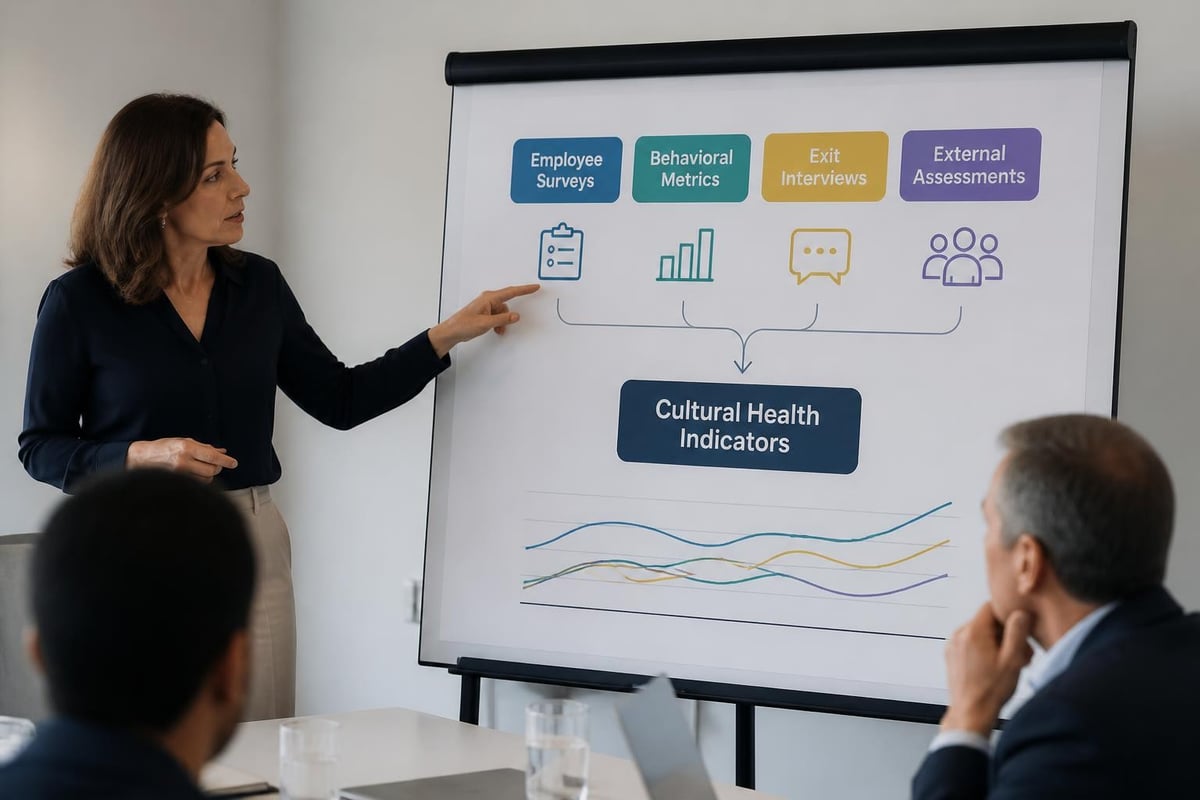
Effective culture measurement combines multiple data sources to create a comprehensive picture:
- Employee surveys: Regular pulse checks on trust, engagement, and perception of cultural values
- Behavioral metrics: Concrete indicators like meeting attendance patterns, internal mobility rates, and collaboration tool usage
- Exit interviews: Candid feedback from departing employees about cultural realities versus stated values
- External assessments: Third-party culture audits providing objective baseline and progress measures
| Metric Type | What It Reveals | Measurement Frequency |
|---|---|---|
| Engagement scores | Emotional connection and commitment | Quarterly |
| Collaboration patterns | Cross-functional integration | Monthly |
| Learning participation | Investment in skill development | Monthly |
| Turnover by cohort | Retention of key populations | Quarterly |
| Promotion equity | Fair advancement opportunities | Semi-annually |
Many organizations track these metrics separately but fail to integrate them into a coherent cultural health dashboard. The most sophisticated approaches apply analytical rigor to culture data comparable to what they bring to financial or operational metrics.
Building Adaptive Capacity
The ultimate goal of new culture efforts extends beyond achieving some static end state. Organizations need cultures that continuously evolve in response to changing contexts while maintaining core identity and values. This adaptive capacity emerges from several interconnected practices.
Feedback loops at multiple organizational levels ensure that cultural insights flow both up and down hierarchies. Experimentation protocols provide structured ways to test new approaches without betting the entire organization on unproven ideas. Reflection rituals create regular opportunities for teams to examine what's working, what's not, and why.
Navigating change effectively requires both individual resilience and organizational systems that support ongoing adaptation. Leaders must cultivate comfort with ambiguity while providing enough stability for people to maintain performance during transitions.
Overcoming Common Implementation Obstacles
Even well-designed culture change initiatives encounter predictable challenges. Anticipating these obstacles and preparing responses increases the likelihood of successful transformation.
Resistance and Skepticism
Employees who've witnessed previous failed change efforts naturally approach new culture initiatives with cynicism. This skepticism often proves well-founded-many organizations announce cultural transformations without making the structural changes necessary to support them. Middle management resistance represents a particularly significant obstacle, as these leaders experience pressure from both directions and may perceive cultural shifts as threats to their authority or expertise.
Addressing resistance effectively requires:
- Acknowledging past failures explicitly and explaining what will differ this time
- Involving skeptics in design processes rather than trying to convince them after decisions are made
- Demonstrating early wins that prove cultural change produces tangible benefits
- Providing support for people whose skills or approaches may no longer align with new expectations
Resource Constraints and Competing Priorities
Cultural transformation competes with product launches, operational improvements, and financial targets for limited leadership attention and organizational resources. When quarter-end pressures mount, culture work often gets deprioritized in favor of more immediate business demands.
Successful organizations integrate cultural objectives into existing business rhythms rather than treating them as separate initiatives. Performance reviews that evaluate cultural contributions alongside business results, strategic planning processes that explicitly consider cultural implications, and resource allocation decisions that fund culture-building activities all help prevent cultural work from becoming optional.
The Role of Communication in Cultural Shifts
How organizations talk about culture shapes how employees experience and engage with transformation efforts. Communication strategies must balance inspiration with pragmatism, acknowledging difficulties while maintaining momentum.
Narrative and Storytelling
Abstract values become meaningful through concrete stories that illustrate what new culture looks like in practice. Organizations that excel at cultural communication curate and share stories about:
- Critical incidents: Moments when individuals faced choices between old and new cultural norms
- System changes: Specific policies or processes that got redesigned to align with cultural values
- Impact examples: Clear connections between cultural shifts and business or employee outcomes
For publications like Fairmont Post that cover evolving organizational practices across sectors, highlighting these narrative examples through features or guest posts from leaders navigating cultural transformation provides valuable insights for audiences managing similar challenges.
Channels and Frequency
Cultural messages require reinforcement through multiple channels over extended periods. All-hands meetings, internal newsletters, team rituals, and informal conversations all serve as vehicles for cultural communication. The most effective approaches create consistency across channels while adapting messaging to different audience segments.
Leaders sometimes assume that announcing new cultural values once or twice suffices. Research consistently shows that messages need repetition across contexts before they penetrate organizational consciousness and influence behavior at scale.
Future Trajectories for Organizational Culture
Cultural evolution doesn't stop. The new culture frameworks organizations build today will themselves require adaptation as technological capabilities expand, generational expectations shift, and societal norms continue evolving. Several emerging trends warrant attention from leaders thinking strategically about cultural positioning.
Artificial intelligence will reshape not just what work gets done, but how humans collaborate, make decisions, and develop skills. Organizations will need cultural frameworks that help people work effectively alongside AI systems while preserving distinctly human contributions. Climate concerns are increasingly influencing where talented people choose to work, pushing organizations to integrate sustainability into cultural identity rather than treating it as a separate initiative.
Generational transitions as Baby Boomers complete their careers and Generation Z enters the workforce in larger numbers will accelerate pressure for transparency, purpose, and flexibility. Geographic dispersion enabled by remote work technology allows companies to access global talent pools but requires cultural approaches that maintain cohesion across time zones and national contexts.
These dynamics suggest that cultural agility-the capacity to sense shifts and adapt intelligently-may become the most valuable cultural attribute organizations can cultivate. Rather than perfecting some ideal culture, the goal becomes building systems and capabilities that support continuous cultural evolution.
Building and sustaining new culture demands intentional strategy, leadership commitment, and patience with the inherently gradual nature of behavioral change at scale. Organizations that approach cultural transformation with the same analytical rigor they apply to operational or financial challenges position themselves to create environments where people thrive and business goals advance in tandem. For comprehensive coverage of how organizations across industries navigate these cultural shifts and other critical business trends, explore the latest insights at Fairmont Post.


