


The united states economic news landscape in 2026 continues to evolve rapidly, driven by shifting monetary policy, robust consumer behavior, and structural changes in labor markets and productivity. For business leaders, investors, and policymakers, understanding these interconnected dynamics has never been more critical. From Federal Reserve policy adjustments to retail spending patterns and technological transformation, the economic signals emerging this year paint a complex picture that demands close attention and informed interpretation.
Federal Reserve Policy and Interest Rate Outlook
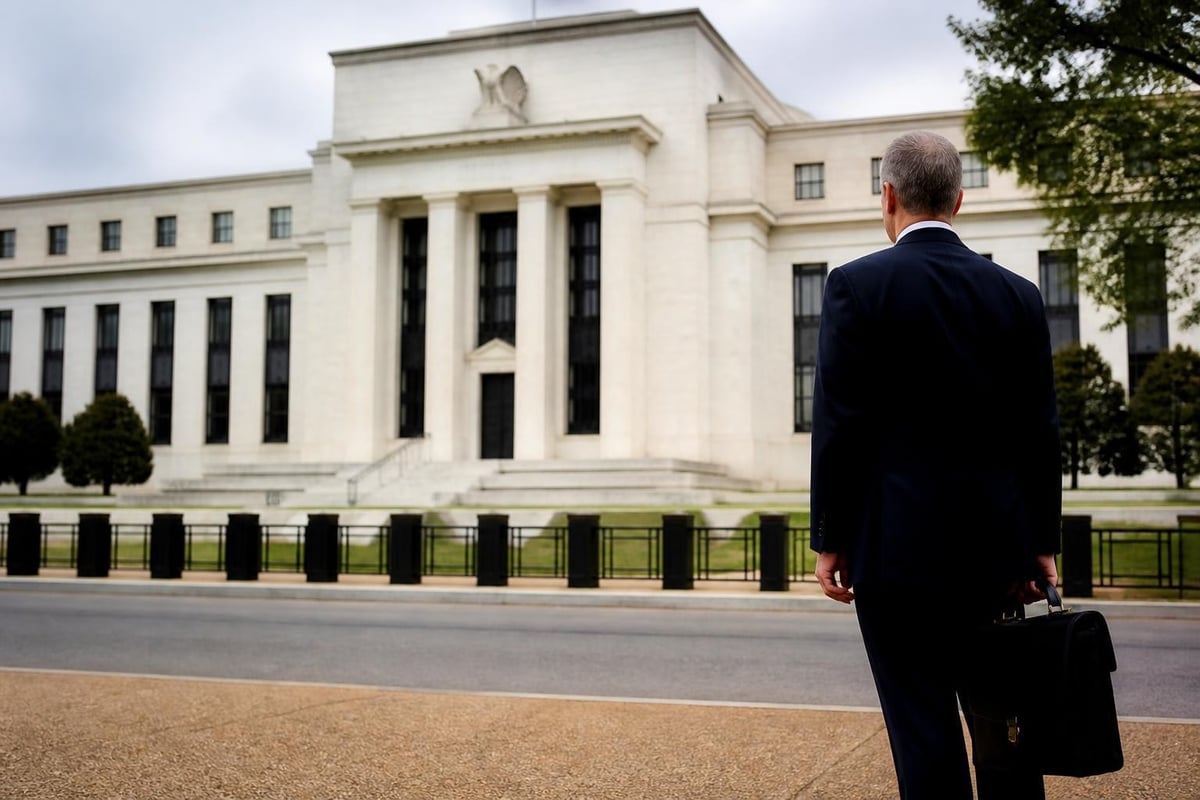
The Federal Reserve's monetary policy decisions remain central to united states economic news, with officials balancing inflation control against growth objectives throughout 2026. Following a period of elevated interest rates aimed at cooling price pressures, the central bank has entered a more nuanced phase of policy calibration.
Recent FOMC Decisions and Market Impact
The Federal Open Market Committee (FOMC) continues to navigate a challenging environment where inflation has moderated from its peaks but remains above the 2% target. According to recent FOMC statements and policy releases, policymakers are carefully weighing incoming data on employment, consumer prices, and financial conditions before making further rate adjustments.
Key considerations shaping Fed policy include:
- Core inflation trends across goods and services sectors
- Labor market tightness and wage growth dynamics
- Financial stability concerns amid elevated asset valuations
- Global economic conditions and cross-border spillovers
The transmission of monetary policy into the real economy typically occurs with lags of 12 to 18 months, meaning decisions made in late 2025 are still working through credit markets, housing, and business investment in 2026.
Implications for Business Planning
Businesses across sectors are adjusting strategic plans based on the interest rate environment. Companies with significant debt loads face higher financing costs, while savers and fixed-income investors benefit from improved yields. The housing market, particularly sensitive to rate changes, has shown mixed signals with affordability challenges persisting even as buyer demand remains relatively resilient in certain metropolitan areas.
GDP Growth and Economic Performance
United states economic news headlines frequently focus on gross domestic product figures, which provide the broadest measure of economic health and activity. The official BEA GDP releases offer comprehensive insights into how different sectors are contributing to overall growth.
| Quarter | Real GDP Growth (Annualized) | Consumer Spending | Business Investment | Net Exports |
|---|---|---|---|---|
| Q1 2026 | 2.3% | 2.8% | 3.1% | -0.4% |
| Q4 2025 | 2.1% | 2.5% | 2.7% | -0.3% |
| Q3 2025 | 2.4% | 2.9% | 2.4% | -0.5% |
The composition of growth matters as much as the headline number. Consumer spending, which accounts for approximately 70% of U.S. economic activity, has shown remarkable resilience despite higher borrowing costs and reduced pandemic-era savings buffers. Business investment in equipment and intellectual property products has accelerated, suggesting confidence in medium-term profit opportunities.
Sector-Specific Performance Patterns
Different industries are experiencing divergent trajectories within the broader economic expansion. Technology sectors continue to benefit from artificial intelligence investments and digital transformation spending. Manufacturing has faced headwinds from inventory adjustments and global competition, while services sectors generally maintain steady growth supported by strong employment.
State-level economic performance varies considerably, with energy-producing states, technology hubs, and financial centers often outpacing regions more dependent on traditional manufacturing or agriculture. These geographic disparities in economic outcomes increasingly shape both united states economic news coverage and policy discussions at federal and state levels.
Consumer Spending and Retail Dynamics
Consumer behavior remains a crucial driver of economic momentum, making retail sales data among the most closely watched indicators in monthly united states economic news cycles. The retail sector has undergone significant transformation, with e-commerce continuing to gain share while brick-and-mortar stores adapt business models.
Current Consumption Trends
Key patterns in 2026 consumer spending include:
- Services preference: Dining, travel, and entertainment spending remains elevated as experiences continue to outpace goods purchases
- Selective value-seeking: Consumers increasingly compare prices across channels and favor discount retailers for staple goods
- Credit utilization: Higher interest rates have moderated credit card growth but overall debt levels remain manageable for most households
- Wealth effects: Stock market performance and home equity gains support spending among higher-income households
The shift toward services reflects both normalized preferences after pandemic-driven goods demand and structural changes in how Americans allocate discretionary budgets. This transition has significant implications for retailers, commercial real estate, and employment patterns across the economy.

Retail Sales Volatility and Interpretation
Monthly retail figures often exhibit volatility driven by calendar effects, weather patterns, and statistical noise. Analysts emphasize the importance of examining three-month moving averages and year-over-year comparisons rather than reacting to single-month changes. The underlying trend through mid-2026 suggests moderate but positive real (inflation-adjusted) consumption growth, consistent with the broader GDP trajectory.
Labor Markets and Employment Dynamics
Employment conditions represent another pillar of united states economic news, influencing everything from consumer confidence to Federal Reserve policy decisions. The labor market in 2026 remains historically tight by many measures, though gradual normalization from pandemic-era extremes continues.
The unemployment rate has held in a narrow range near 4%, consistent with full employment by conventional definitions. However, participation rates, job openings-to-unemployed ratios, and quit rates all suggest some cooling from 2021-2023 peaks when workers enjoyed exceptional bargaining power and mobility.
Wage Growth and Inflation Pressures
Average hourly earnings continue advancing at a pace that exceeds historical norms but has decelerated from recent peaks. This moderation helps explain why inflation pressures have eased even while labor markets remain relatively tight. Productivity gains, discussed below, have allowed employers to absorb higher labor costs without proportional price increases in many sectors.
Wage growth varies significantly across:
- Industry sectors (healthcare and technology typically higher)
- Geographic regions (coastal metros versus heartland)
- Skill levels (college-educated versus high school)
- Union versus non-union workforces
These disparities contribute to broader economic inequality trends and shape political debates around minimum wages, worker protections, and tax policy.
Productivity Trends and Long-Term Growth Potential
Productivity growth, measured as output per hour worked, fundamentally determines long-run living standard improvements and economic potential. Recent research on pro-productivity policies highlights how investments in education, infrastructure, and research can enhance this critical metric.
United states economic news in 2026 includes encouraging signs of productivity acceleration following a decade of sluggish gains. Technology adoption, particularly artificial intelligence tools that augment worker capabilities, appears to be driving measurable efficiency improvements across professional services, healthcare, and manufacturing operations.
| Metric | 2020-2024 Average | 2025-2026 Trend | Historical Average |
|---|---|---|---|
| Labor Productivity Growth | 1.4% | 2.1% | 2.0% (1995-2005) |
| Total Factor Productivity | 0.8% | 1.3% | 1.2% (long-run) |
| Capital Deepening | 0.6% | 0.8% | 0.8% |
Sustained productivity gains allow the economy to grow faster without generating inflation, expand employment without wage-price spirals, and raise living standards across income distributions. The extent to which 2026 improvements represent temporary rebounds versus durable shifts remains a subject of economic debate and ongoing analysis.
Investment in Innovation and Infrastructure
Business investment in research and development has reached near-record levels as a share of GDP, driven by competitive pressures in technology, pharmaceuticals, and clean energy sectors. Public infrastructure spending, supported by recent legislation, is gradually flowing into transportation, broadband, and utilities projects that should enhance productivity across coming years.

Trade Policy and International Economic Relations
The global context for united states economic news includes ongoing evolution in trade relationships, supply chain configurations, and cross-border investment flows. Analysis from policy research organizations emphasizes how trade policy choices affect domestic industries, consumer prices, and geopolitical positioning.
Current Trade Developments
Manufacturing reshoring and "friendshoring" trends continue reshaping global supply networks, with companies balancing cost optimization against resilience and geopolitical risk management. The trade deficit has narrowed modestly from pandemic-era peaks but remains substantial, reflecting both strong domestic demand and persistent competitive challenges in certain industries.
Tariff policies, trade agreements, and regulatory harmonization efforts all influence the competitive landscape for American businesses. Service exports, particularly in software, entertainment, and professional services, represent growing strengths that partially offset merchandise trade imbalances.
Financial Markets and Investment Trends
Stock market performance, bond yields, and credit conditions provide forward-looking indicators of economic expectations and risk perceptions. Equity valuations in 2026 reflect optimism about corporate profit growth and AI-driven productivity gains, though concerns about elevated multiples and potential policy uncertainty persist.
The corporate earnings outlook remains generally positive, supported by consumer spending resilience, margin management, and technological efficiency gains. However, sector dispersion has widened, with clear winners in technology and healthcare contrasting with challenges in traditional retail, commercial real estate, and certain manufacturing segments.
Credit Market Conditions
Corporate bond markets show:
- Investment-grade spreads near historical medians
- High-yield spreads reflecting moderate default expectations
- Refinancing activity constrained by higher absolute rates
- Strong demand from institutional investors seeking yield
Small business credit availability has tightened relative to the ultra-loose conditions of 2020-2021 but remains adequate for qualified borrowers. Regional bank stability, a concern following 2023 stress events, has improved through strengthened capital ratios and more conservative liquidity management.
Housing Market Dynamics
Residential real estate represents both a significant economic sector and a major wealth component for American households. The housing market in 2026 faces crosscurrents between demographic demand drivers, affordability constraints, and inventory limitations.
Median existing home prices have stabilized after rapid pandemic-era appreciation, with regional variation reflecting local job growth, migration patterns, and zoning policies. New construction has accelerated in response to persistent shortages, though remains below levels needed to fully address long-term undersupply in many metros.
Mortgage rates, closely tied to Federal Reserve policy and broader bond market conditions, have moderated from peaks but remain above historical averages. This dynamic keeps monthly payment burdens elevated and limits turnover as existing homeowners resist giving up lower rates from previous years.
For those seeking diverse perspectives on economic trends and market developments, platforms like Fairmont Post offer analysis spanning business, finance, and technology sectors, and even welcome expert contributions through guest post opportunities for those with specialized insights to share.
Policy Debates and Fiscal Outlook
United states economic news increasingly intersects with fiscal policy discussions as policymakers confront questions about tax structures, spending priorities, and debt sustainability. The federal budget deficit remains elevated relative to historical peacetime norms, driven by mandatory spending growth, interest costs, and revenue structures.
Key Fiscal Challenges
- Entitlement program sustainability as demographics shift
- Interest expense growth reflecting higher rates and accumulated debt
- Discretionary spending pressures across defense and domestic programs
- Tax policy choices affecting growth incentives and revenue adequacy
These structural challenges require difficult political trade-offs and have significant implications for long-term economic growth, intergenerational equity, and macroeconomic stability. The path forward will shape investment returns, business planning horizons, and living standards for decades.
Regional Economic Variations
Economic conditions vary substantially across states and metropolitan areas, reflecting different industry mixes, demographic trends, and policy environments. Sunbelt states have generally experienced stronger population and economic growth, driven by favorable business climates, lower costs, and climate preferences.
Technology hubs, energy production centers, and major port cities each face distinct opportunity sets and challenges. Understanding these geographic patterns helps businesses make location decisions, investors identify opportunities, and policymakers tailor interventions to local conditions.
Analysis from institutions like Liberty Street Economics provides valuable research on regional economic dynamics, financial stability issues, and monetary policy transmission that complements national-level united states economic news coverage.
Forward-Looking Indicators and Risk Factors
Economic forecasting involves balancing baseline expectations against upside and downside risk scenarios. Leading indicators such as building permits, manufacturing orders, consumer confidence surveys, and yield curve shapes provide advance signals of potential turning points.
Current risk factors include geopolitical tensions, climate-related disruption potential, cybersecurity threats to critical infrastructure, and political uncertainty around elections and policy continuity. On the positive side, technology innovation, energy transition investments, and demographic workforce renewal offer upside possibilities.
The consensus economic outlook for late 2026 and into 2027 anticipates continued moderate growth, gradually declining inflation, and cautious Federal Reserve policy adjustments. However, the range of plausible outcomes remains wide, underscoring the importance of scenario planning and maintaining strategic flexibility in both business and investment contexts.
Navigating the complex currents of the United States economy requires staying informed about policy shifts, market dynamics, and emerging trends across sectors and regions. Whether you're tracking Federal Reserve decisions, consumer spending patterns, or productivity developments, comprehensive coverage helps make sense of how these forces interact and what they mean for your business or investment decisions. Fairmont Post delivers in-depth analysis and timely updates on business, finance, technology, and the economic trends shaping our world, helping readers stay ahead of the curve with insights that matter.


